Posts

Showing posts with the label Animals

Sept - Using Cellular Respiration to Make Root Beer!

Image
Simple Sugar Glucose This month, I got to teach a class on cellular respiration, or how cells make energy.  Cellular respiration is the process of breaking down sugars into ATP (Adenosine triphosphate), what we call energy.  Cells can use Aerobic or Anaerobic pathways for breaking down sugars into energy.  Aerobic means 'with oxygen' while Anaerobic means 'without/lacking oxygen'.  Although a cell can use both pathways to produce energy, the efficiency of ATP production is greatly affected in a non-oxygen environment compared to when oxygen is present for the process.  For comparison, a single glucose (sugar) molecule will produce only 2 ATP in the fast paced and wasteful anaerobic process, while the aerobic process can produce 34-38 ATP from the same, single sugar molecule.   The complicated process of how a cell makes energy Our class experimented with yeast to see how the process works in real time.  We couldn't, of course, see the cellula...

February should be called DNA Month - Strawberry DNA Extracting

Image
  DNA is the building blocks to all life Deoxyribonucleic-Acid, or DNA for short, is the genetic material that forms the basis of all life.  Without DNA, you would basically be a rock (i.e. rocks are not living and therefore don't have DNA).  Another way to think of DNA is to compare it to a building's blueprint; it is the instruction manual for constructing life.   DNA lives in the nucleolus of every living cell.  It takes the form of a double helix structure, usually depicted in a counter-clockwise rotation (upwards).  Some might refer to its unwound shape as a ladder, with two sugar phosphate 'sides' and rungs made of 4 nucleotide bases joined 1:1: Adenine, Thymine, Cytosine, Guanine.  Unique is also the fact that if you look at the 'rungs' of DNA, Adenine will only pair with Thymine, and Cytosine will only pair with Guanine.  If you really want to get minuet, the whole of DNA is purposefully designed based upon the use of the 5 ...

January 2023 ~ STEM Planning 2023!

Image
 Planning forward for Spring 2023! Welcome to the new year and a new season of STEM talks!  If you are like me, you might be breaking out that new 2023 planner and have already started color coordinating your dates, meetings, summer camps, and maybe even a vacation squeezed in there somewhere? I'd say most of us like to plan ahead, and if you're a teacher (or parent), you are always looking ahead to the next scheduled thing to keep your kids learning and having some fun along the way.   I'm a big fan of planning ahead, so below I've put down a couple ideas for classes, activities, and just plain fun things to do that might take just a little planning beforehand to accomplish!  Chicken Embryology 101 Growth Stages One of our most popular spring projects. Learn about life cycles while you watch and learn through a real classroom hatching experience.  Classes receive 12-18 fertilized eggs, an incubator, and all hatching supplies.  The cycle typically exte...

Classroom Embryology! - Nov 17th

Image
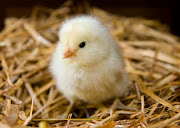
  The month's of October and November have been pretty exciting! I have had the pleasure of partnering with a class of Pomona Elementary 3rd graders to explore the world of chicken hatching! For the last 21 days, these kids have been learning all about chicken development from start to finish. Even more exciting; the teacher was able to use our embryology program materials and incubator to raise about 20 eggs in the classroom! Day by day record of chick development Youth have been learning about development each day. After about 4 days, they candled eggs to check for signs of both fertilization and growth. Eggs that were unfertilized were taken out of the incubator as unfertilized eggs will start to rot and fumes from bad eggs can lead to the death of live eggs. Views of egg candling over different days As growth occurs, eggs will get darker and darker with the increasing mass of the chick. After day 18, candling becomes almost impossible for healthy eggs. But durin...

Feb 25th ~ Livestock Animals and How They Help Us

Image
 This last week has been very busy, but very rewarding as well! A while back I was invited to guest speak to the Johnson Elementary School 2nd Grade classes about Livestock Animals. My topic to share was 'Livestock Animals, their attributes, and how they help humans solve problems' . This is a very exciting topic to me because animals are a crucial part of human life all over the globe. Cattle Each class began with a quiz about their knowledge of proper names for species, and boy/girl. I laugh a little right now because the first slide I put up was of cattle - but every class yelled "COWS!". I explained that was not right because technically cows are the female, but no one would judge them for calling cattle, cows...hahaha! After we had some fun naming livestock, the kids were challenged to match the animal with a product it provides. We then brought up the web of products and discussed many things we knew animals provided and a lot of things we d...

Nov 13 ~ 3rd Grade PBL's on Animals

Image
  Animals and Spring Creek ! Third PBL panel sitting in three weeks, but I never get tired of watching kids present and listening to what they learned during their projects! This time around, 3rd graders shared with panel members what they have been learning about animals that use Spring Creek in the winter. This PBL was special to me because it's the first one I helped with solo (with PBL materials supplied by Dr. Barbara Shaw, STEM/K-12 Specialist). Sunflower Bird Feeder 3rd graders were definitely nervous going into presentations, but once they began to speak they showed they were confident about the information presented. Oct-Nov they had been learning about winter habits of animals and how they survive, experimented with bird diets (See Oct 21-22 Blog on Bird Feeder experiment), and learned how to ID birds by their silhouette's when we can't ID them with normal factors. Wild Turkey Silhouette The presentations used either photo slide shows or full power point presenta...

Oct 21-22 ~ Oak Grove Elementary 3rd Grade PBL

Image
  Birds and Bird Feeders! Bagel feeders displayed outside classroom 3rd grade at Oak Grove is studying animals that use Spring Creek during the winter months. Since kids spend so much time indoors during the winter, what better way to observe the birds than by building bird feeders for outside their classroom windows! Students wanted to learn what diets birds best like to eat when given a choice. They crafted 6 bagel bird feeders using a variety of different ingredients including: Lard, Birdseed, Sunflower Seeds, Crackers, and Oats. the bird feeders were all weighed before being hung up outside for a week of observations. Oat bagel 2nd weighing 3rd graders then watched out their windows to see all the different feathered friends that came to eat up the yummy treats. Can you guess what bird feeder was most popular when we re-weighed the feeders a week later? HINT: It shouldn't surprise you!